How to prevent water damage during Deukmejian Wilderness Park Area wildfire season
Wildfire season in Verdugo City doesn't just bring fire risk - it sets up your home for flooding, mudslides, and leaks. Here's how to prevent water damage before the first rain.
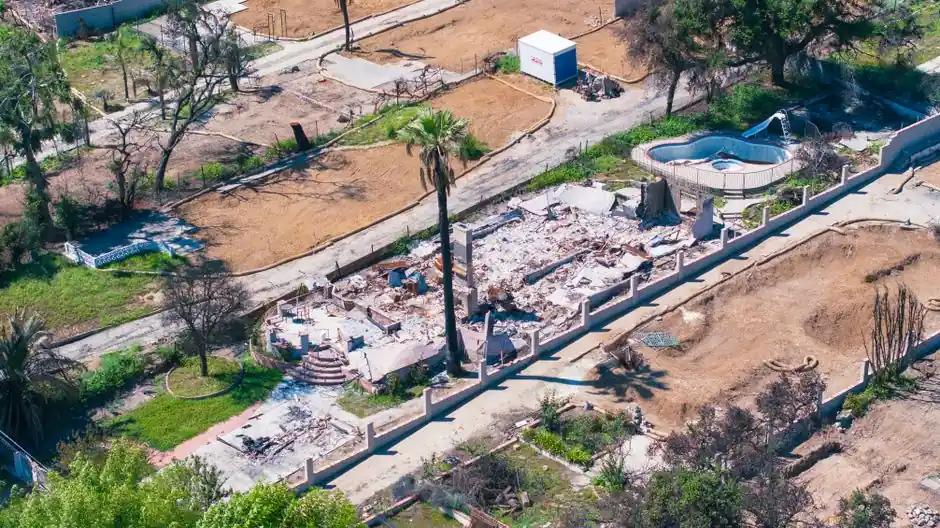
You prevent water damage during Deukmejian Wilderness Park Area wildfire season by hardening your roof, gutters, and drainage before the first rain and by managing the burn scar above your property. Wildfire season in Verdugo City does not just create fire risk - it strips hillsides of vegetation, bakes soil into a water-repellent crust, and turns ordinary winter storms into mudflows and flash flooding. The rest of this post covers the specific steps we take on homes here, from roof inspections to sump pumps to post-fire drainage checks.
Why wildfire season causes water damage in Deukmejian Wilderness Park Area
Wildfire season causes water damage in Deukmejian Wilderness Park Area because burned soil develops a hydrophobic layer that sheds rain instead of absorbing it, sending runoff and debris toward homes below the park. That layer can form at temperatures above 400°F and persist for one to three years after a fire. On the steep slopes above Verdugo City, a storm that would normally soak in becomes a sheet of muddy water moving at 10-20 mph.
The damage shows up in predictable places: water sheeting under sliding doors, gutters overflowing because downspouts are packed with ash and needles, and debris basins backing up onto driveways. We have pulled wet drywall out of homes on the north side of Verdugo City after a single 20-minute cloudburst that followed a small brush fire the previous summer. The fire did not touch the house. The runoff did.
There is also the firefighting side. A 2,500-square-foot home can take 3,000-5,000 gallons of water during a structure fire, and much of that ends up in the attic, walls, and crawl space. Even a near-miss fire leaves you with a wet roof and saturated insulation if crews used your property as a staging area. That is why we treat water damage remediation after fire in Verdugo City, California as its own discipline - smoke and char are only half the cleanup.
How to prevent water damage during Deukmejian Wilderness Park Area wildfire season
How to prevent water damage during Deukmejian Wilderness Park Area wildfire season comes down to four systems: roof, gutters, grade, and foundation. Each one fails in a specific way after a fire season, and each one is cheaper to fix in October than in February.
1. Inspect and clear the roof before the first rain
Walk the roof line or have it inspected for cracked tiles, lifted shingles, and failed flashing around the chimney and skylights. Ash and charred needles collect in roof valleys and hold moisture against the decking. We look for granule loss on asphalt shingles and rust streaks on vents - both signal water is already getting in. A roof inspection in this area runs $150-$400 in 2026, and a full replacement on a 2,000-square-foot ranch home runs $18,000-$28,000. Catching a $300 flashing repair now beats a $4,000 ceiling repair later.
2. Clean gutters and downspouts, then test them
Gutters clogged with ash and burned debris overflow at the fascia, which rots the wood and wicks into the wall cavity. Clean them after the first significant wind event of the season and again in early December. Then run a hose down each downspout and confirm water exits at least 6 feet from the foundation. If your downspouts dump at the corner of the house, add 4-foot extensions or splash blocks. This single step prevents most of the foundation seepage we see in Verdugo City.
3. Re-grade soil away from the foundation
Fire season dries and shrinks soil, which pulls it away from the foundation and creates a channel for water. After the first rain, that channel fills and the water goes straight to your footing. Add compacted soil to create a 6-inch drop over the first 10 feet away from the house. Do not pile soil against stucco or siding - keep it 4 inches below the sill plate. If you have a crawl space, check that the vents are clear and the vapor barrier is intact.
4. Install or test a sump pump and backwater valve
If your home has a basement or a below-grade garage, a sump pump is the difference between a wet floor and a $12,000 cleanup. Test it by pouring 5 gallons of water into the pit and confirming the float kicks on and the discharge line is clear. A 1/3-horsepower submersible pump runs $150-$350 installed in 2026. A backwater valve on the main sewer line costs $800-$1,500 and prevents municipal storm surges from backing sewage into your floor drains - a real risk in older Verdugo City neighborhoods where the storm and sanitary lines are close together.
5. Harden the landscape above your property
If you back up to the park or to a burned slope, you need a debris barrier. Sandbag walls, straw wattles, and rock berms placed 10-15 feet uphill of your structure redirect mudflow around the house. We have seen a $200 sandbag wall save a $40,000 retaining wall. Clear dead vegetation and any burned trees within 30 feet of the structure, and do not replace them with wood mulch, which floats and clogs drains. Use gravel or rock instead.
Post-wildfire flooding prevention in Deukmejian Wilderness Park Area
Post-wildfire flooding prevention in Deukmejian Wilderness Park Area starts the day the fire is out, not the day the rain starts. Burn scars above the park shed water for up to three years, and the first storm after a fire is the most dangerous because the soil has not yet stabilized. If a fire burned within 2 miles of your home, assume your drainage is compromised.
Here is the sequence we recommend:
- Within 48 hours of the fire being contained: photograph your roof, gutters, and downspouts for insurance, and clear any ash or fire retardant residue before it hardens.
- Before the first rain: install sandbags or wattles on the uphill side, clean all drains, and confirm your sump pump works.
- During heavy rain: stay off the roads below burned slopes - mudflows can move faster than you can drive.
- After the storm: check your crawl space and basement for seepage, and inspect the roof from the ground with binoculars for missing shingles.
If water does get in, the clock matters. Mold can begin growing on wet drywall within 24-48 hours, and the longer you wait, the more likely you are to need mold remediation after water damage in Verdugo City, California. We can usually dry a wet room in 3-5 days with commercial dehumidifiers and air movers if we start within the first 24 hours.
Wildfire season water damage prevention for Verdugo City homeowners
Wildfire season water damage prevention for Verdugo City homeowners has to account for the specific housing stock here. Many homes in Verdugo City were built between 1920 and 1960 with galvanized supply lines, clay sewer laterals, and pier-and-beam foundations. Those systems are already near the end of their service life. Add a fire season that dries out the soil and a winter that dumps 10 inches of rain in a week, and you get pipe failures and foundation movement.
We see this most often in the older pockets of Verdugo Woodlands Water Damage Restoration, where mature oak roots and aging clay laterals are a bad combination. A root intrusion that was harmless in July becomes a sewage backup in January. If you are on a slab, watch for new cracks in the drywall above door frames - that is often a sign the soil has moved and a pipe underneath is stressed.
One more local factor: the Verdugo City area gets Santa Ana winds that can push embers and ash into roof vents and attic spaces. Ash is acidic and holds moisture. If your attic smells like a campfire after a wind event, have it inspected. We handle attic mold remediation in Verdugo City, California for exactly this scenario - ash plus a small roof leak equals mold on the roof sheathing within a month.
Common mistakes to avoid
The most common mistake we see is waiting until the first storm to check drainage. By then, the gutters are full, the sandbags are sold out, and the sump pump has been sitting in the pit for two years without a test. Here are the others:
- Assuming the fire department's water is the only water risk. Runoff and mudflow cause more water damage in this area than firefighting does.
- Cleaning gutters but not testing downspouts. A clear gutter with a clogged downspout still overflows at the foundation.
- Using wood mulch on burned slopes. It floats, clogs drains, and adds fuel for the next fire.
- Ignoring the crawl space. A 2-inch puddle in a crawl space can raise humidity to 80% and grow mold on the floor joists within a week.
- Not documenting before-and-after conditions. Insurance claims for post-fire water damage go smoother with photos taken before the rain.
If you have already had water intrusion, do not run a household fan and call it done. A box fan moves air but does not remove moisture from the framing. We use thermal imaging and pin meters to confirm the structure is dry before we close anything up. That is the difference between a repair and a repeat.
When to call a professional
Call a professional when water has reached the subfloor, the wall cavity, or the crawl space, or when you can smell damp earth indoors after a storm. Those are signs that moisture is trapped where a shop vac cannot reach. We handle emergency water removal in Verdugo City, California with truck-mounted extraction and commercial drying equipment, and we can usually be on site the same day.
You should also call if your insurance adjuster needs a moisture map, if the water came from a sewage backup, or if you see mold within 48 hours of a leak. Small surface spills are a DIY job. Anything that has soaked into drywall, insulation, or framing is not.
Frequently Asked Questions
How does wildfire season cause water damage in Deukmejian Wilderness Park Area?
Burned soil forms a water-repellent layer that sheds rain instead of absorbing it, sending runoff and mud toward homes below the park. That layer can last 1-3 years, and a single storm can deliver more water than your drainage was built for.
How can I prevent water damage after a wildfire in Verdugo City California?
Clear ash from gutters and roof valleys, test downspouts and sump pumps, add sandbags or wattles on uphill slopes, and photograph everything before the first rain. Start within 48 hours of the fire being contained for the best results.
Does homeowners insurance cover wildfire-related water damage in Verdugo City?
Most standard policies cover water damage from firefighting efforts and from subsequent rain if the fire created the opening. Mudflow and flood damage usually require a separate flood policy. Document conditions before and after the storm and call your adjuster early.
What should I do about water damage during wildfire season in Deukmejian Wilderness Park Area?
Stop the source if you can, move furniture and electronics off wet flooring, and call a restoration company within 24 hours. Mold can start growing in 24-48 hours, and the faster water is extracted, the less demolition you need.
How long does it take to dry a water-damaged room?
Most rooms dry in 3-5 days with commercial dehumidifiers and air movers. Crawl spaces and wall cavities can take 5-7 days. We confirm dryness with moisture meters before we remove equipment.
Get help with Water Damage Restoration in Verdugo City
If wildfire season has already put water in your home, we can help. Our team handles everything from emergency extraction to full structural drying, and we work directly with your insurance adjuster. Call (833) 321-7153 for same-day service in Verdugo City and the surrounding foothills.